
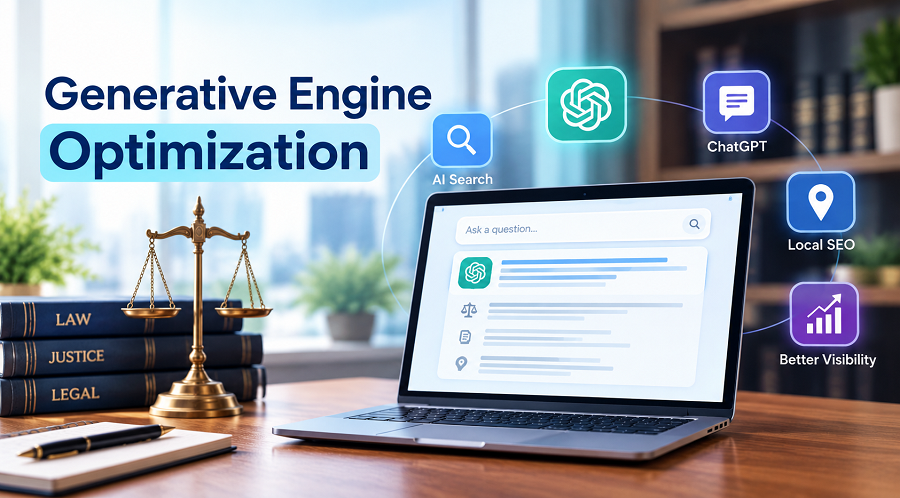
Generative Engine Optimization (GEO) is the practice of making a law firm’s online information useful, clear, trustworthy, and easy for generative search systems to understand and reference when answering legal questions. For attorneys, this means going beyond traditional rankings and creating content that directly addresses what potential clients ask in Google, ChatGPT, Gemini, Perplexity, Copilot, and other search experiences.
For law firms, generative engine optimization for law firm strategies should not replace traditional SEO. Instead, they should strengthen the same fundamentals: useful content, technical accessibility, clear legal expertise, strong local signals, authoritative references, and pages that genuinely answer client questions.
Google’s current guidance for generative AI search emphasizes unique, valuable, people-first content and says traditional SEO remains foundational for visibility in AI-powered search experiences.
What Is Generative Engine Optimization for Law Firms?
Generative Engine Optimization, often shortened to GEO, focuses on improving the likelihood that a firm’s information can be understood and used as a source in AI-generated answers.
Traditional SEO often asks:
“How can this page rank higher for a particular search?”
GEO adds another question:
“How can this page provide such a clear and trustworthy answer that an AI-powered search system can understand and potentially reference it?”
For attorneys, this distinction matters because people increasingly search using complete questions rather than short keywords.
For example, someone may ask:
- “What should I do after being injured in a car accident?”
- “How long do I have to file a personal injury claim in my state?”
- “Do I need a lawyer for a business contract dispute?”
- “What happens during a divorce mediation?”
- “How much does a criminal defense attorney cost?”
- “Which type of attorney handles an employment dispute?”
A law firm’s website should provide useful answers to questions like these while clearly explaining where legal advice depends on jurisdiction, facts, and individual circumstances.
Why Does GEO Matter to Attorneys?
Legal search is highly dependent on trust.
Someone choosing an attorney may not simply search for a law firm and click the first result. They may compare several firms, ask follow-up questions in an AI tool, read reviews, examine attorney biographies, check practice areas, and research the legal issue before contacting a firm.
That creates several opportunities for law firms.
A strong generative engine optimization for law firm strategy can help organize the firm’s online information around the questions potential clients actually ask.
The goal is not to manipulate AI systems into mentioning a firm. There is no reliable shortcut that guarantees inclusion in an AI-generated answer. Instead, the goal is to build a credible digital presence that gives search engines and AI systems useful information to understand.
Google specifically advises website owners to focus on valuable, unique, non-commodity content rather than attempting to use GEO or AEO “hacks.”
Make Your Law Firm Easier to Find
If your law firm’s content is ranking but not generating meaningful visibility across modern search experiences, Social Booster Solutions can review your current content, search visibility, and opportunities for AI-focused optimization.
Book a strategy consultation with Social Booster Solutions to review your law firm’s search presence.
How Is GEO Different From Traditional SEO?
GEO and SEO overlap significantly, but they place emphasis on different aspects of search visibility.
Traditional SEO focuses heavily on factors such as:
- Keyword relevance
- Search intent
- Technical SEO
- Internal linking
- Backlinks and authority
- Local search visibility
- Page experience
- Organic rankings
GEO places additional attention on whether information is easy to interpret and useful as an answer.
For example, instead of creating a generic page targeting “personal injury lawyer,” a law firm might build helpful resources answering specific questions about common personal injury situations.
The content should explain the issue clearly, avoid unsupported claims, distinguish general information from legal advice, and make it easy for readers to understand what steps they may need to consider.
This approach benefits both people and search systems.
What Does SGEO for Law Firms Mean?
SGEO for Law Firms can be understood as Search Generative Engine Optimization focused specifically on legal services.
The strategy should connect several areas of digital visibility rather than treating AI search as a separate marketing channel.
A strong SGEO approach can include:
- Helpful practice-area content
- Attorney biographies and credentials
- Location-specific legal information
- Frequently asked legal questions
- Case-related educational resources
- Clear service descriptions
- Internal links between related topics
- Citations and references where appropriate
- Strong technical SEO and indexing
- Consistent business information
- Genuine reviews and reputation signals
For attorneys, this matters because AI-powered search systems need context. A page saying that a firm handles “family law” provides less useful context than a well-developed page explaining the firm’s family law services, relevant jurisdictions, attorney experience, common client questions, and related resources.
How Does Local SEO Fit Into GEO?
AI search does not eliminate local search.
In many legal searches, location remains essential because laws, courts, filing requirements, and professional licensing can vary by jurisdiction.
That makes Local SEO for law firm websites an important part of a broader GEO strategy.
A firm’s location signals should be consistent across its website and legitimate third-party business profiles.
Local content can also answer questions that combine a legal issue with a geographic area.
For example:
“How does the divorce process work in [state]?”
is much more useful to a potential client than a generic article titled:
“What Is Divorce?”
Location-specific information should be accurate and genuinely relevant. Creating large numbers of nearly identical city pages with minimal differences can create poor user experiences and does not align with Google’s people-first guidance.
What Role Does ChatGPT SEO for Lawyers Play?
ChatGPT SEO for lawyers refers to preparing a firm’s online presence so its information is easier for conversational search tools to understand when people ask legal questions.
The key is not writing content specifically to “trick ChatGPT.”
Instead, attorneys should publish information that answers natural questions clearly.
Consider the difference between these approaches:
Keyword-focused:
“Personal injury lawyer services.”
Question-focused:
“What should you do immediately after a serious car accident?”
The second format naturally addresses a user’s information need.
A strong legal content strategy can cover the questions people ask before they are ready to contact a lawyer. It can also explain terminology, processes, potential considerations, and when professional legal guidance may be appropriate.
That creates useful content for readers while giving search systems clearer context about the firm’s areas of knowledge.
For a closer look at this process, read how law firms can get found when people ask ChatGPT for a lawyer and what factors can influence their visibility in conversational search.
What Is Answer Engine Optimization for Law Firms?
Answer engine optimization for law firms focuses on creating content that directly responds to questions.
This can be especially useful for FAQ sections, practice-area resources, educational articles, and legal guides.
A useful structure often looks like this:
Question: What does a personal injury attorney do?
A personal injury attorney helps clients understand and pursue legal claims arising from qualifying injuries caused by another party’s conduct, subject to applicable law and the facts of the case.
The explanation can then expand on the circumstances, relevant legal considerations, and why someone may want professional guidance.
This answer-first format makes content easier to scan and can improve the experience for someone who needs a quick explanation before reading further.
What Should Law Firms Include in GEO-Friendly Content?
Strong legal content needs more than keywords.
Attorneys should focus on accuracy, expertise, originality, and usefulness.
Important elements include:
1. Answer the question early
Do not make readers work through several paragraphs before reaching the answer.
Start with a concise explanation, then provide supporting details.
2. Show who is behind the information
Attorney bios, author information, qualifications, practice areas, and relevant professional experience can help establish context and trust.
Google’s people-first guidance encourages clear authorship where appropriate and emphasizes experience, expertise, authoritativeness, and trustworthiness.
3. Add information that is actually useful
A page should contribute something beyond what dozens of other law firm websites already say.
This might include attorney perspectives, explanations of local procedures, practical questions clients commonly ask, original research, or clear explanations of complicated legal concepts.
4. Use internal links naturally
A page about personal injury claims could link to related pages about car accidents, medical expenses, settlement considerations, and attorney consultations.
Internal linking helps visitors move between related resources and gives search systems additional context about the site’s subject areas.
5. Keep legal information accurate
Legal content can affect significant decisions, so accuracy matters.
Avoid presenting general information as personalized legal advice. Where rules vary by jurisdiction or circumstances, explain that clearly and identify the relevant jurisdiction.
How Can the SmartCase™ AI Growth Framework for Law Firms Help?
The SmartCase™ AI Growth Framework for Law Firms can be used as a structured approach to connecting traditional SEO, AI-search visibility, content strategy, local search, and conversion-focused website improvements.
Rather than treating GEO as a standalone tactic, the framework can organize a firm’s digital marketing around the entire client journey.
That can include understanding:
What people search → What questions they ask → What information they need → What sources they trust → What pages answer those questions → What action they take next.
For a law firm, this creates a more practical strategy than publishing articles simply because a keyword has search volume.
To understand how this approach works in practice, see our guide on how AI growth systems work for law firms and how SmartCase™ connects different parts of a firm’s digital marketing strategy.
Build a Search Strategy Around Client Questions
Social Booster Solutions helps law firms connect traditional SEO with conversational search, local visibility, content strategy, and AI-search considerations.
Contact Social Booster Solutions to discuss how the SmartCase™ AI Growth Framework can fit your firm’s goals.
Does GEO Replace SEO for Law Firms?
No.
This is one of the most important points attorneys should understand.
Google’s current documentation says the same foundational SEO practices used for traditional Search remain relevant to AI features. Pages still need to be accessible, crawlable, indexable, and eligible to appear in Google Search before they can potentially be used as supporting links in AI Overviews or AI Mode.
That means a firm should not abandon:
- Technical SEO
- Local SEO
- Search intent research
- Quality content
- Internal linking
- Website usability
- Reputation development
- Accurate business information
GEO works alongside these activities.
For a broader look at how AI-focused search strategies fit into modern legal marketing, read AI SEO for lawyers: what actually works in 2026.
What Should Attorneys Do Now?
Law firms do not need to rebuild their entire websites around AI search.
A better starting point is to evaluate the website as a potential client’s research resource.
Ask:
Does the website answer real questions?
Is the legal information accurate and current?
Can visitors understand which attorney or practice area is relevant to their situation?
Are location and jurisdiction clearly explained?
Can search engines crawl and index the important pages?
Does the firm demonstrate real expertise rather than repeating generic legal information?
Would a potential client find the content useful even if Google did not send any traffic?
That last question is particularly important.
Google’s current guidance says content should primarily be created to help people rather than to manipulate search rankings. It also warns against mass-producing content without adding meaningful value.
If you want a practical process to follow, read our guide on how lawyers can rank in AI answers step-by-step for a closer look at the key areas to address.
The Future of Legal Search Is More Conversational
People are becoming more comfortable asking detailed questions rather than entering short keyword phrases.
Instead of searching:
“divorce attorney Dallas”
a potential client may ask:
“What are the first steps to take if I am considering divorce in Dallas?”
That change creates an opportunity for law firms that provide clear, useful answers.
The strongest strategy is not to predict every possible AI query. It is to understand the questions clients genuinely have and build authoritative resources that address those needs.
Turn Legal Questions Into Useful Content
If your firm has strong legal knowledge but its website does not reflect that expertise, Social Booster Solutions can help identify content gaps, search opportunities, and ways to improve your visibility across traditional and AI-driven search.
Book a consultation with Social Booster Solutions and start building a people-first search strategy.
Final Takeaway
Generative engine optimization for law firm websites is not about finding a secret formula for getting mentioned by ChatGPT, Google AI Overviews, or another platform.
It is about making a firm’s expertise easier to understand, easier to access, and genuinely useful to the people searching for legal information.
For attorneys, the strongest approach combines SGEO for Law Firms, Local SEO for law firm websites, ChatGPT SEO for lawyers, and answer engine optimization for law firms with the fundamentals that have always mattered: accurate information, strong technical foundations, clear expertise, useful content, and a trustworthy online presence.
Google’s latest guidance reinforces this direction. There is no requirement to create special content solely for AI search. Instead, firms should continue producing original, useful, people-first content while maintaining strong SEO fundamentals.
For a law firm, that means the goal is simple: answer the questions clients actually have, demonstrate why your information deserves trust, and make it easy for both people and search systems to understand what your firm can help with.